
Wingfoil for beginners: the mistakes that really hold you back
Wingfoiling looks simple when you watch it from the beach. Yet the first sessions are rarely smooth. You manage a decent start, then suddenly fall without really understanding why.
In most cases, progress does not stall because of fitness or lack of courage. It stalls because of poor decisions made at the beginning: unsuitable gear, badly chosen conditions, or rushing through key steps too quickly.
Here are the mistakes most often seen with beginners, and above all why they really slow down the learning process.
TRYING TO FLY BEFORE LEARNING TO RIDE FLAT
Flying is the goal, of course. But trying to lift off in the very first hour often creates the opposite effect.
As long as your flat riding line is not stable, your acceleration is not progressive, and your balance is not understood, takeoff becomes abrupt. The board rises too fast, drops back down hard, or starts oscillating. In wingfoiling, flight is not something you force. It happens when speed is under control and your weight distribution is clean. Working first on flat stability helps avoid many unnecessary falls.
ION CLUB tip: dedicate one full session only to flat control with a SUP or windsurf board. Simple goal: ride 100 stable meters in a row without trying to lift off. The flight will come naturally after that.
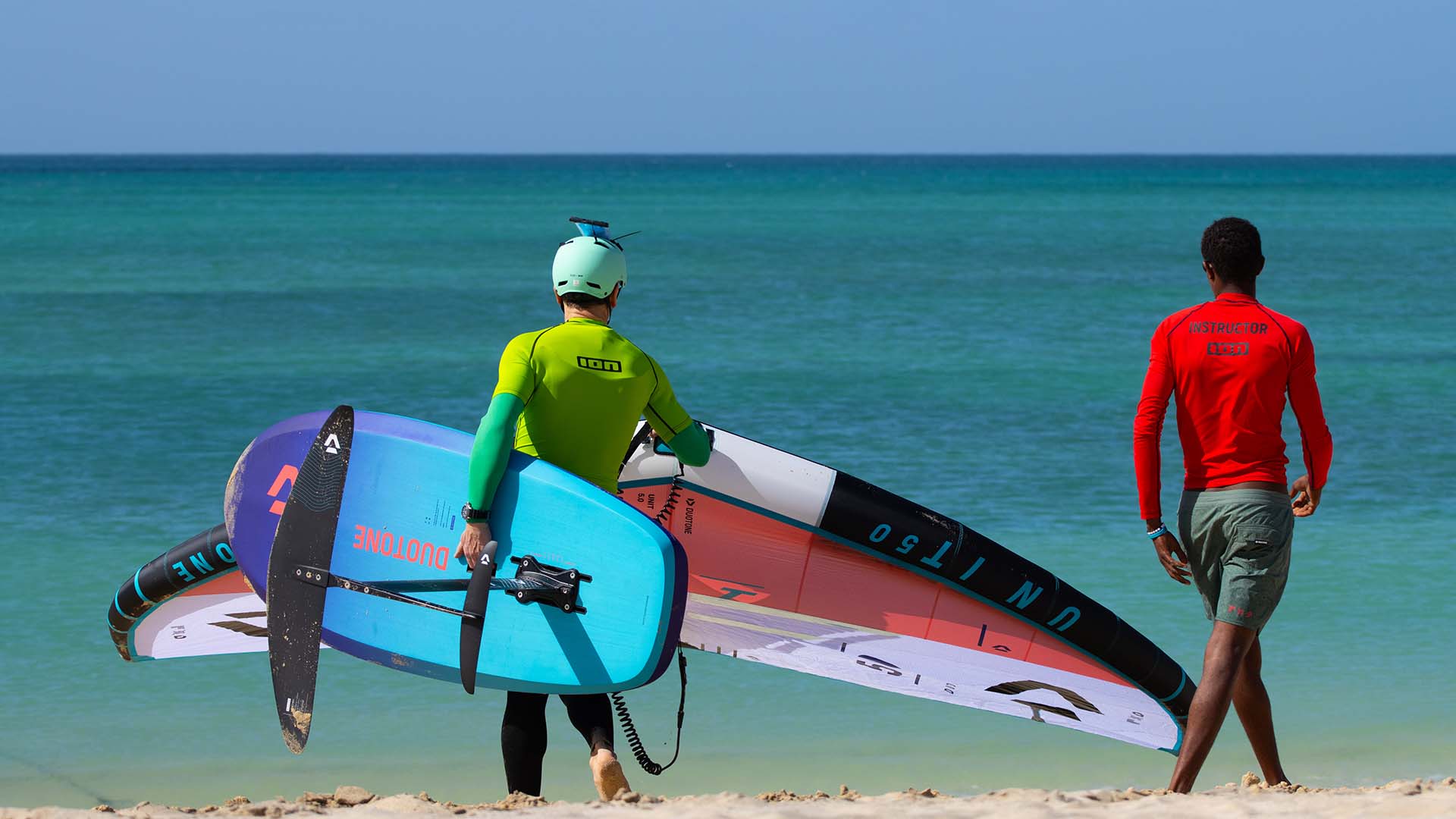
CHOOSING A BOARD THAT IS TOO SMALL
Many beginners want gear they can grow into right from the start. The result is often a board that is too small, unstable when stationary, and demanding during takeoff.
A board with good volume is not a disadvantage. It gives stability during the critical phases: getting onto the board, building speed, and handling the wind. That stability frees up mental energy. Instead of fighting just to stay standing, you can focus on wing position and direction.
ION CLUB tip: choose a comfortable volume for your first sessions, even if it feels “too easy.” It is far better to reduce volume after three successful sessions than to struggle unnecessarily from day one.

USING A FOIL THAT IS TOO TECHNICAL
High performance foils that are thin and fast look appealing on paper. In practice, they require precision and a fairly high minimum speed to work properly.
A more forgiving foil with better lift and progressive takeoff helps you feel your balance points and anticipate the rise into flight. It is also much more tolerant of positioning mistakes. In the beginning, that forgiveness makes a real difference.
ION CLUB tip: choose a stable front wing with smooth, progressive lift off. The goal is not to go fast, but to understand lift and learn to control your flight height.
TENSING UP AS SOON AS THE BOARD ACCELERATES
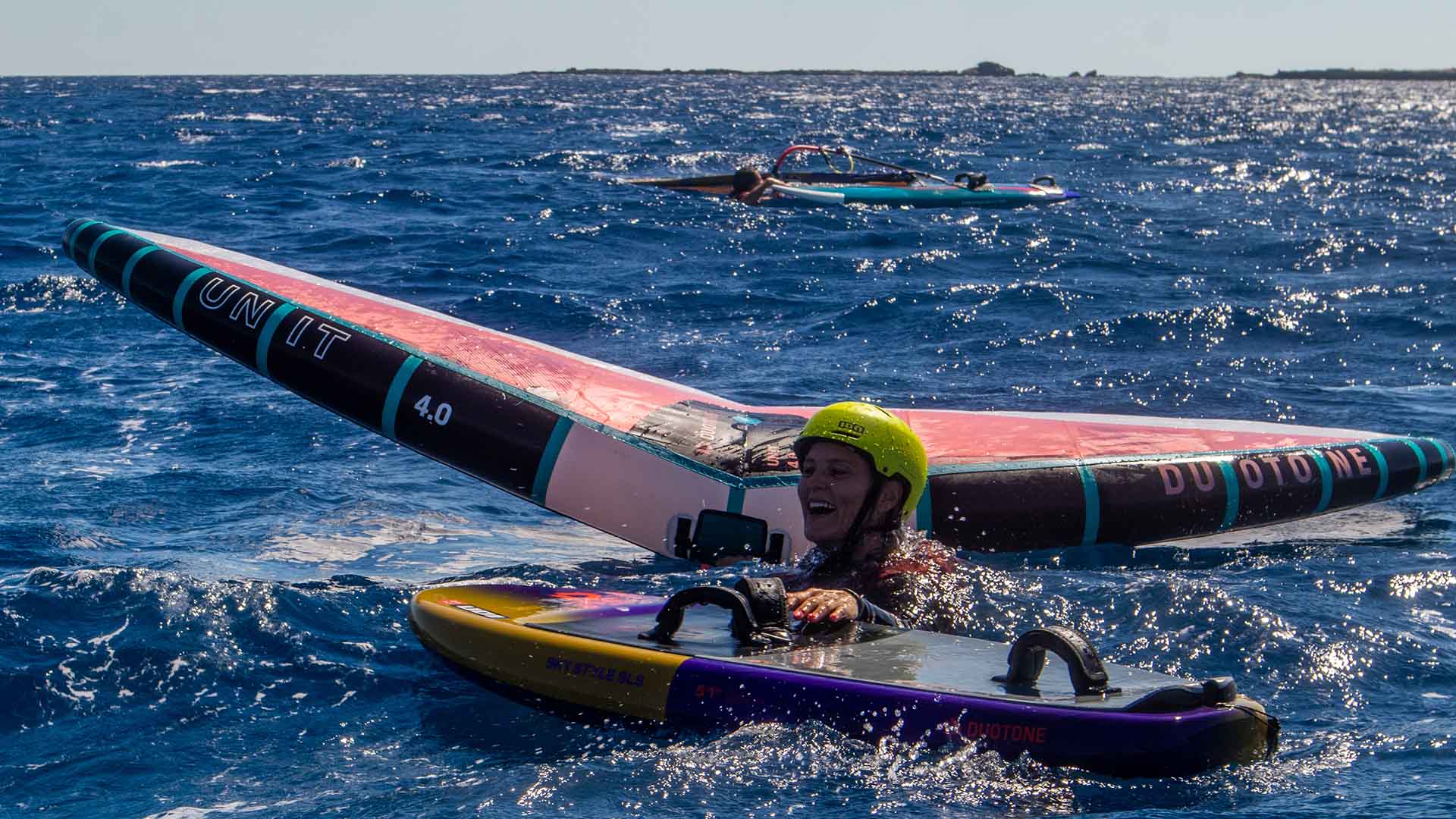
As soon as speed increases, many riders tense up through the upper body. Their arms lock out, shoulders rise, and their eyes drop toward the board. That tension makes it harder to absorb changes in lift.
Wingfoiling requires strength in the legs and relaxation in the upper body. The knees absorb movement, the arms follow naturally, and your eyes stay focused ahead. The more fluid your body is, the easier the foil becomes to control.
ION CLUB tip: consciously focus on breathing during your runs. Controlled breathing helps prevent tension and keeps your shoulders relaxed and low.

LOOKING AT YOUR FEET
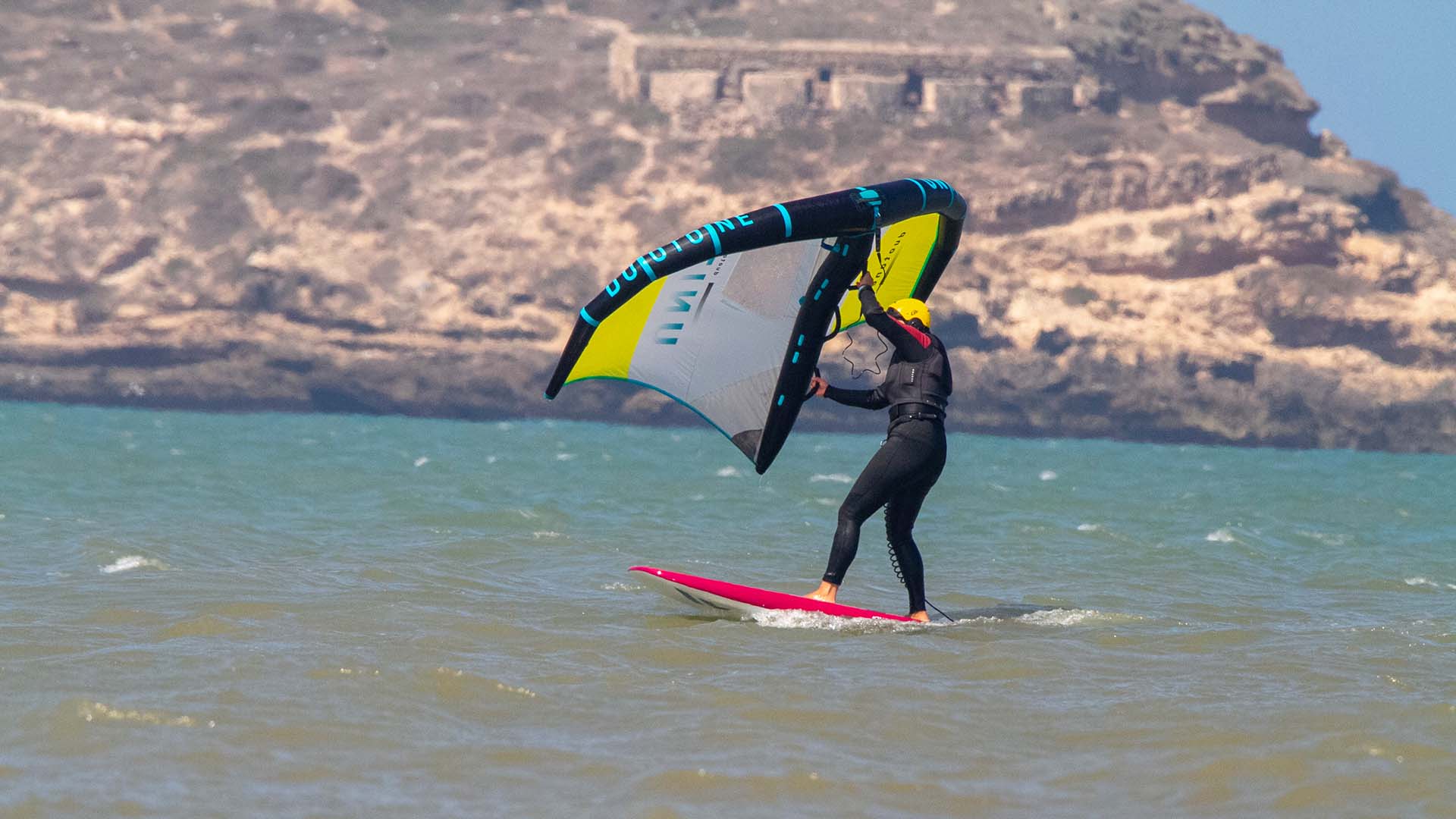
Where you look plays a major role in balance. Looking down at the board shifts your weight forward and throws your body out of alignment.
Stable riders look ahead toward the line they want to follow. This simple adjustment immediately improves both stability and direction.
ION CLUB tip: pick a fixed point on the horizon and keep your eyes on it while riding.
CHOOSING THE WRONG CONDITIONS
Riding in too little wind forces you to work too hard. Riding in too much wind puts you straight into survival mode. In both cases, learning becomes confusing.
Steady, moderate wind on relatively flat water greatly reduces the difficulty. Your first sessions should take place in stable conditions so it is easier to understand the sensations and build confidence.
ION CLUB tip: aim for steady wind between 15 and 20 knots when starting out, on flat or lightly choppy water. Stable conditions speed up progression.

UNDERINFLATING THE WING
A wing that is not inflated enough loses rigidity. Its shape deforms, power delivery becomes inconsistent, and control becomes more difficult. Proper inflation improves profile stability and reduces strain in the arms.
ION CLUB tip: follow the pressure recommended by the manufacturer and check it before every session. Two minutes of checking can prevent a lot of instability on the water.
RIDING WITHOUT A CLEAR GOAL
Many beginners do run after run without any clear purpose. They try everything at once: lifting off, turning, accelerating. The result is that no skill is properly developed. Effective progression depends on simple, focused goals. One session = one priority.
ION CLUB tip: set just one goal for each session: stability, getting onto the plane, first short flights, or height control. Clear focus speeds up learning.
THE BEST ION CLUB TIP
For learning wingfoiling, the best advice is to start with a school and a qualified instructor. At ION CLUB, we offer lessons from beginner to advanced level with recent, well suited DUOTONE equipment, led by certified instructors. Thanks to a progressive and safe teaching method, you improve quickly while enjoying your time on the water.
Whether you want to discover the sport, become independent, or refine your technique, our centres welcome you in ideal conditions. Join ION CLUB and make your first wingfoil sessions an unforgettable experience.

TARIFA ODER ESSAOUIRA: WHICH WIND CAPITAL?
Tarifa vs Essaouira: Which Wind Capital Is Right for You?When looking for a reliable windy destination between Europe and North Africa, two names naturally stand out: Tarifa, on the southern tip of Spain, and Essaouira, Morocco’s Atlantic pearl.Two oceanfront towns,...

EQUIPMENT STORAGE AT THE CLUB: RIDE HASSLE FREE
STORE YOUR GEAR AT THE CLUB When planning a watersports trip, one question always comes up, even if you do not say it out loud: should you bring your own gear or rent equipment on the spot? We have already compared storage and rental options, but before that, there is...
DAKHLA VS SAFAGA
Dakhla vs Safaga: Which destination should you choose based on your rider profile?When you plan a watersports trip, you’re not just choosing a destination. You’re choosing a daily rhythm, the intensity of your sessions, and the atmosphere after the ride. Between...