
WETSUITS & ACCESSORIES: HOW TO CHOOSE THE RIGHT WETSUIT FOR THE SEASON AND YOUR DESTINATION
The question almost always comes up too late, the day before you leave, when you are packing your bag. Which wetsuit should you bring for this spot at this time of year? The answer comes down to one thing: the water temperature.
THE BASICS: WATER TEMPERATURE, NOT AIR TEMPERATURE
Above 24°C, a shorty wetsuit or a lycra is usually enough. Between 20°C and 24°C, a shorty or a thin 3/2 mm full wetsuit will do the job. Between 15°C and 19°C, you’ll need a 3/2 mm or 4/3 mm full wetsuit, along with surf booties. Below 15°C, booties, gloves and a hood become essential, with a 4/3 mm to 5/4 mm wetsuit depending on how sensitive you are to the cold.
Wind, session length and your personal tolerance to cold can all affect these guidelines, sometimes quite significantly.


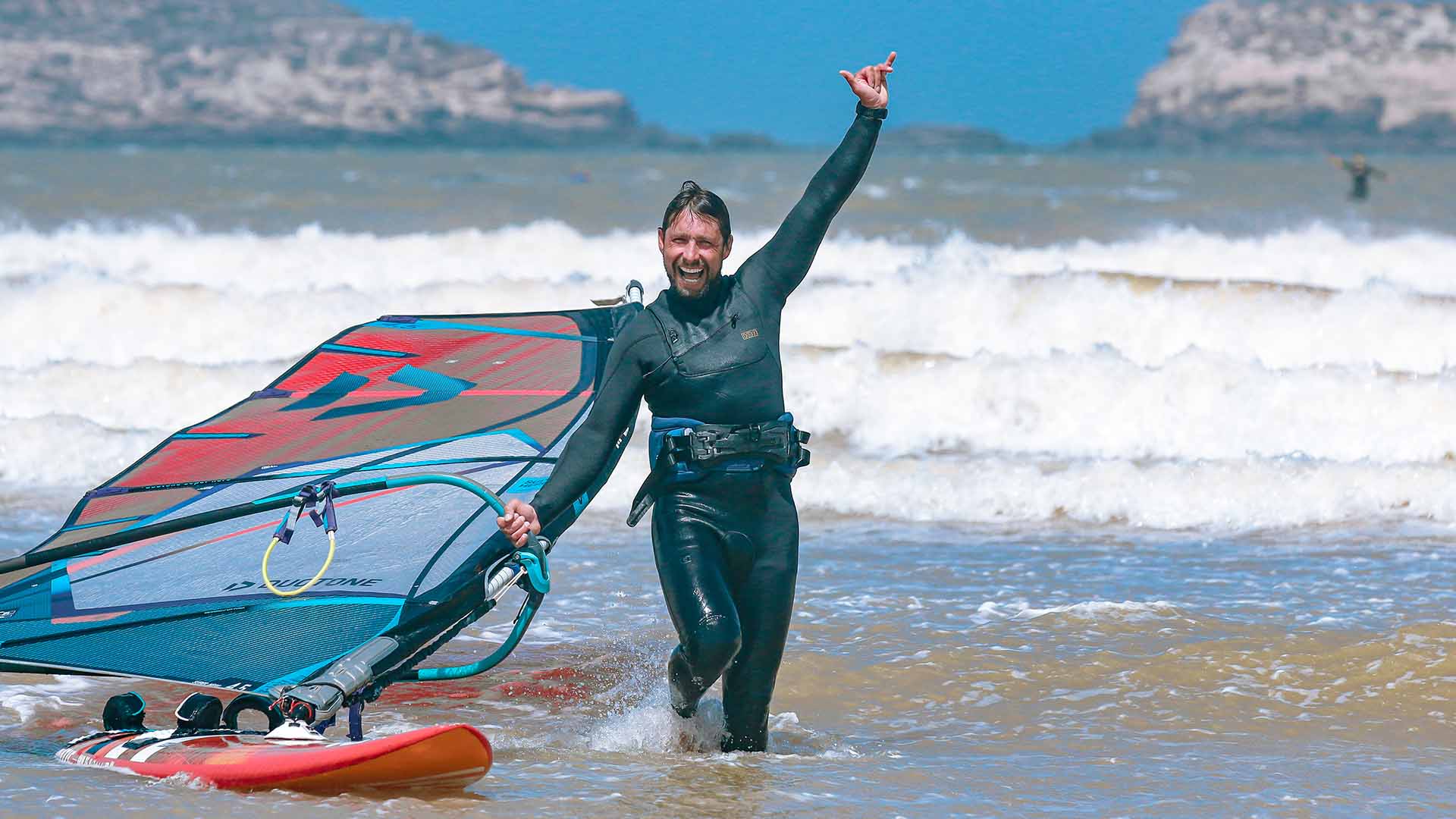
DESTINATION BY DESTINATION: WHAT TO PACK
In Cape Verde, the water stays pleasant all year round, generally between 22°C and 28°C depending on the month. In winter, a shorty or a thin wetsuit can be a good idea, especially when it’s windy.
In Dakhla, the Atlantic is much cooler than you might expect, with water temperatures generally ranging from 17°C to 21°C throughout the year. The lagoon can sometimes feel a little warmer, but the wind can quickly make you feel cold. A 3/2 mm wetsuit or a shorty works well for much of the year, while a 4/3 mm can be more comfortable during the cooler months.
In Fuerteventura, water temperatures don’t change much throughout the year, averaging around 18°C to 23°C depending on the season. A 3/2 mm wetsuit is a versatile choice for most sessions, although you might prefer something lighter during the warmest months.
Tarifa and Essaouira are quite different. In Tarifa, water temperatures range from around 16°C in winter to 21°C in the middle of summer. A 4/3 mm wetsuit is a comfortable choice during the colder months, while in summer you can switch to a 3/2 mm or a shorty, depending on the conditions.
In Essaouira, the Atlantic keeps the water cool even in summer, with temperatures generally staying between 16°C and 19°C throughout the year. With the often strong winds, a full wetsuit is useful for most of the season, usually a 4/3 mm during the cooler months and a 3/2 mm when conditions are milder.
Golf de Roses is the destination where water temperatures change the most between the beginning and the peak of the season. The water is still around 17°C in April, when the center reopens, before gradually warming up to around 23°C in July and August. You will need a warmer wetsuit in spring, while a shorty or a thin wetsuit may be enough in the middle of summer.
In Mauritius, at Le Morne, the water stays warm and pleasant all year round, with temperatures ranging from around 23°C to 28°C depending on the season. During the warmest months, a lycra is usually enough, while a shorty or a light wetsuit can be a good choice between June and September.
In Safaga, on the Red Sea, water temperatures average between 22°C and 29°C throughout the year. In summer, you can easily get out on the water in just a lycra or swimsuit, while in winter, a light wetsuit is usually a better choice, especially when it’s windy.
BOOTIES, GLOVES AND HOODS: THE ACCESSORIES THAT MAKE ALL THE DIFFERENCE IN COLD WEATHER
Choosing the right wetsuit isn’t always enough. When water temperatures drop below 14°C, booties become almost essential to keep a good feel for your board without your feet getting too cold.
Below 11°C, gloves and a hood become important too, not just for comfort, but to prevent losing dexterity, which can quickly become a problem or even a safety risk when controlling your kite.
AND WHAT ABOUT WARMER CLIMATES?
At the other end of the scale, in destinations like Cape Verde or Mauritius during summer, the main concern isn’t the cold, but the sun. A long-sleeved lycra provides effective UV protection during sessions that can last several hours, without adding any unnecessary thickness.
It’s something that’s still too often forgotten when packing, with most of the attention going to choosing the right wetsuit.

HOW TO MAKE YOUR KITESURFING WETSUIT LAST, WHEREVER YOU GO
A wetsuit that travels with you from one spot to another can wear out faster than you might think, especially when it’s exposed to sand, salt and sun in different destinations throughout the year.
Rinsing it with fresh water after every session and letting it dry in the shade rather than in direct sunlight can significantly extend its lifespan, often by several seasons.
At all our centers, you will find everything you need to rinse your wetsuit after each session.
PACKAGES DAKHLA LASSARGA
FROM JUNE 15 TO SEPTEMBER 15, 2026, TAKE ADVANTAGE OF OUR EXCLUSIVE ION CLUB PACKAGE: HOTEL + ACTIVITY + FULL BOARD + TRANSFERS Our exclusive 7-night / 8-day packages offer much more than just a stay. Dive into the kitesurfing or wingfoiling experience under the...
CAPE VERDE : SAL OR BOA VISTA?
CAPE VERDE: SAL OR BOA VISTA? THE COMPLETE GUIDE FOR YOUR NEXT TRIPWhen people think about a watersports trip to Cape Verde, most immediately think of Sal. Yet just a few kilometers away, Boa Vista offers a different experience. Same archipelago, same ocean, same Cape...
TARIFA ODER ESSAOUIRA: WHICH WIND CAPITAL?
Tarifa vs Essaouira: Which Wind Capital Is Right for You?When looking for a reliable windy destination between Europe and North Africa, two names naturally stand out: Tarifa, on the southern tip of Spain, and Essaouira, Morocco’s Atlantic pearl.Two oceanfront towns,...