
Kitesurf, wingfoil, windsurf: WHICH ONE SHOULD YOU CHOOSE ?
On the beach, you will often see the same three sports. A kite pulling a rider out to sea. A small wing held in both hands, just above the water. A windsurf board with its sail, moving upwind with ease. Three sports, three different feelings, and one question we often hear at ION CLUB: which one should you try first?
There is no single best sport. It all depends on the wind conditions, the equipment, how long it takes to learn, and what you’re looking for when you get on a board.
WINGFOILING: THE EASIEST SPORT TO GET STARTED WITH
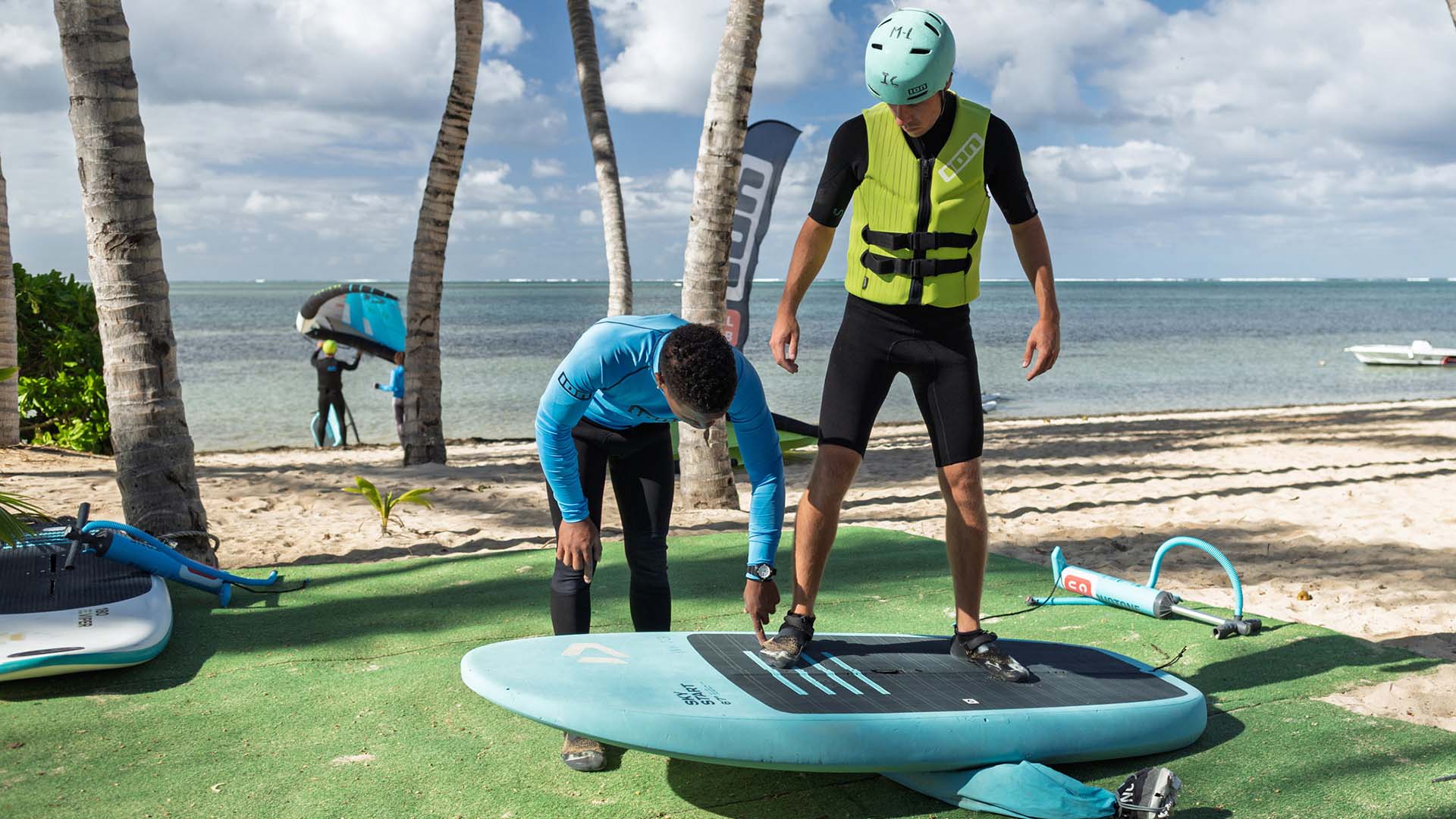
Wingfoiling is one of the most popular sports for beginners today. You hold a light wing in your hands, with a foil under your board, and learning is fairly easy. With good instruction, the right support and a bit of practice, almost anyone can learn wingfoiling, even without any previous watersports experience.
The equipment is another advantage. To get started, you need a board of around 120 litres, a foil and a wing that folds into a small backpack. It’s much easier to carry than a windsurf mast and a large sail. Our wingfoil equipment guide explains how to choose the right gear, step by step.
Another big advantage is that wingfoiling doesn’t need very strong wind. Ideal conditions are around 20 knots, but experienced riders can get going in just 12 to 13 knots. This means more days on the water, even at spots where the wind isn’t very strong.

KITESURFING: HARDER TO LEARN, BUT MORE EXCITING ONCE YOU GET THE HANG OF IT
Kitesurfing is generally more technical to learn at first. You need to control the kite, understand the wind window, and coordinate the board and lines. Learning the basics usually takes at least 12 hours of lessons, and you need enough wind for the kite to pull you properly.
But that is also what makes kitesurfing so special. Once you’ve learned the basics, you can start jumping, enjoy different riding conditions (waves, flat water or chop), and experience a freedom of movement that’s hard to find in other watersports. Our kitesurf equipment guide helps you choose the right kite and board for your level.
AND WHAT ABOUT WINDSURFING?
Windsurfing is one of the original watersports that paved the way for other disciplines. It remains a sport of its own, with a different learning process. You can learn to sail in a straight line in just a few hours, but mastering turns like tacking and jibing takes several days of regular practice. Choosing the right sail size for your level and the wind conditions also makes a big difference.
Windfoiling, the modern version of windsurfing, is a different story. Without a solid background in traditional windsurfing, it’s extremely difficult to get started. You already need good technical skills, so it’s not a sport for complete beginners.

WIND CONDITIONS: THE MOST IMPORTANT FACTOR WHEN CHOOSING YOUR WATERSPORT
Before thinking about your level, you need to think about the wind. A spot with average winds of 12 to 15 knots can be great for wingfoiling and still work for traditional windsurfing, but beginner kitesurfers may spend a lot of time waiting on the beach.
On the other hand, a spot with winds of 20 knots or more can offer good conditions for all three sports. It’s something worth checking before booking lessons, along with your own experience level.
Very windy spots, with winds around 35 knots, are often a favourite playground for experienced windsurfers.

KITESURFING, WINGFOILING OR WINDSURFING: WHICH IS THE SAFEST?
This question comes up almost as often as how difficult each sport is to learn. Kitesurfing has a reputation for being more dangerous, mainly because of the power of the kite if you lose control. But kitesurfing equipment has a safety system that you learn to use from your very first lessons. Good instruction, a quick-release system and a safety boat on the water help reduce the risks from the start.
Wingfoiling, on the other hand, doesn’t have the same constant pull. You can simply let go of the wing when needed, which can make it feel less intimidating for beginners on the water. Windsurfing doesn’t have a separate kite pulling you, making it easier to manage in this respect. The main challenge at first is simply staying balanced on the board.
KITESURFING, WINGFOILING OR WINDSURFING: WHICH ONE SHOULD YOU CHOOSE?
If you don’t have much time and want to see progress from your first few sessions, wingfoiling or windsurfing are probably your best options. If you already have experience in board sports like skating, surfing or snowboarding, and you are keen to spend more time learning for a more exciting experience, kitesurfing could be a great fit.
If you are looking for a well-established sport that lets you enjoy the feeling of riding across the water and make the most of strong winds, windsurfing is still a great choice.
There is no wrong choice. It all depends on what suits you best, how much time you have, the wind conditions and your motivation to learn.

KITESURFING, WINGFOILING AND WINDSURFING ON THE SAME TRIP
For experienced riders, our Multisport Rental option lets you switch between kitesurfing, wingfoiling and windsurfing equipment depending on the wind conditions and what you feel like doing that day.
It’s a great way to enjoy different watersports during your trip without having to choose just one before you go.
TARIFA ODER ESSAOUIRA: WHICH WIND CAPITAL?
Tarifa vs Essaouira: Which Wind Capital Is Right for You?When looking for a reliable windy destination between Europe and North Africa, two names naturally stand out: Tarifa, on the southern tip of Spain, and Essaouira, Morocco’s Atlantic pearl.Two oceanfront towns,...
EQUIPMENT STORAGE AT THE CLUB: RIDE HASSLE FREE
STORE YOUR GEAR AT THE CLUB When planning a watersports trip, one question always comes up, even if you do not say it out loud: should you bring your own gear or rent equipment on the spot? We have already compared storage and rental options, but before that, there is...
DAKHLA VS SAFAGA
Dakhla vs Safaga: Which destination should you choose based on your rider profile?When you plan a watersports trip, you’re not just choosing a destination. You’re choosing a daily rhythm, the intensity of your sessions, and the atmosphere after the ride. Between...