
KITESURFING LESSON: WHAT HAPPENS DURING YOUR FIRST SESSION
Booking your first kitesurfing lesson often comes with the same questions. Will I go straight into the water? Is it dangerous? How long will it take before I can stand up on the board?
To give you a clear idea of what to expect, here is exactly how a first session works at our ION CLUB centres, from the initial briefing to your first experience with the kite, and what comes next.
WHAT DOES A FIRST KITESURFING LESSON LOOK LIKE?
Your first kitesurfing lesson takes place entirely on the beach and focuses on understanding the kite and the wind. You do not need any previous experience to get started, and there is no need to worry: no one sends you straight into the water from the very first minute.
The session has two main goals. First, you learn the essential safety basics that everything else depends on. Then, you learn how to control the kite. By the end of your first lesson, you will understand how the kite generates power and how to keep it under control.
WHAT HAPPENS BEFORE YOU GET INTO THE WATER?
Your lesson starts with a chat with your instructor. They will ask about your confidence in the water, your goals, and the wind conditions for the day before getting you set up with your equipment. For this first session, you can often stay in your regular clothes, as you will be spending the lesson on the beach. Your instructor will help you choose the right harness and explain what each piece of equipment does, including the quick-release safety system that lets you instantly depower the kite if needed.
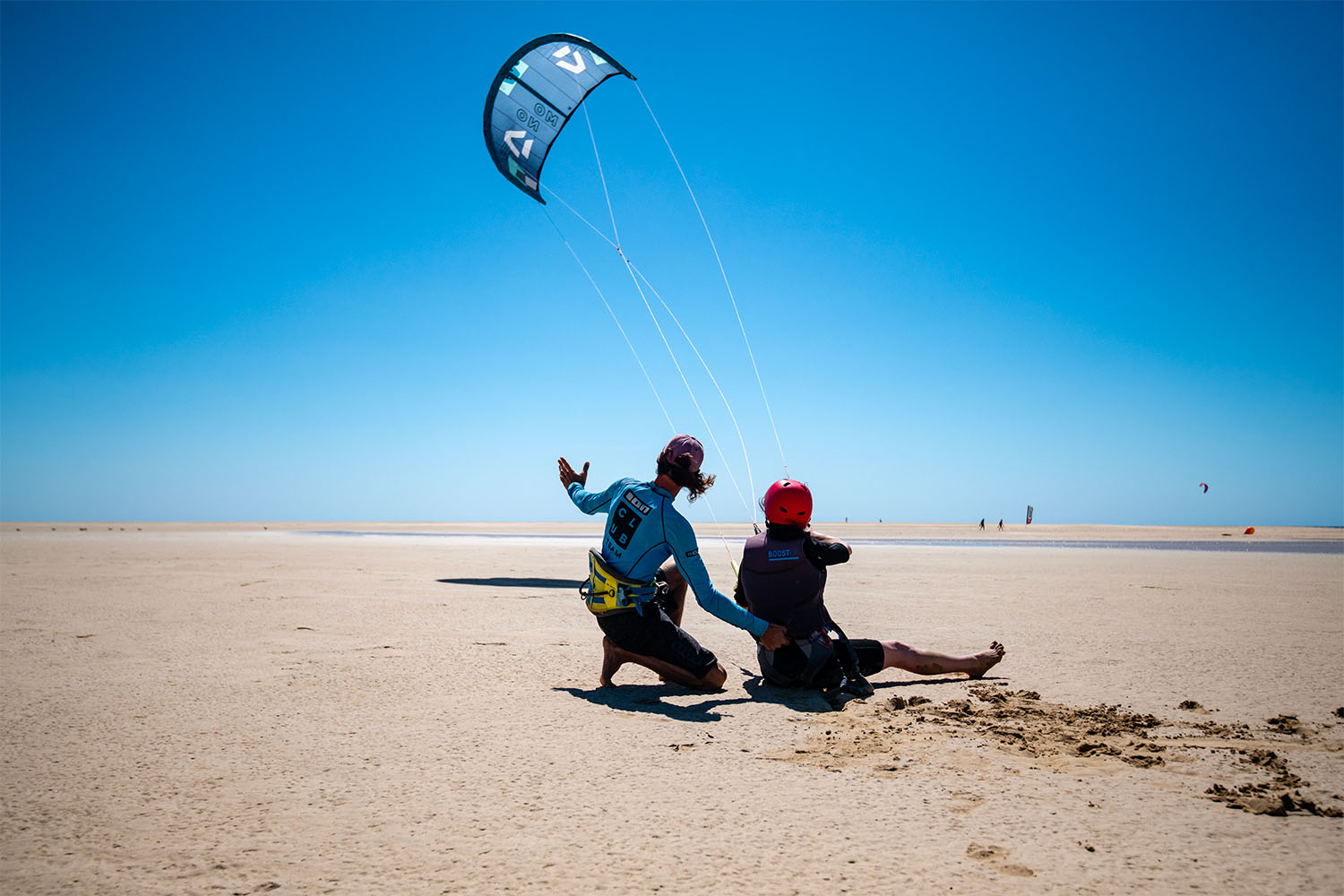
This first part of the lesson is all about safety. You will learn about the wind window, the area of the sky where the kite generates power, and the neutral zone, where the kite stays stable and produces very little pull, either above your head or near the edges of the wind window. Understanding how the wind window works helps you avoid the most common beginner mistakes.
HOW DO YOU LEARN TO CONTROL THE KITE?
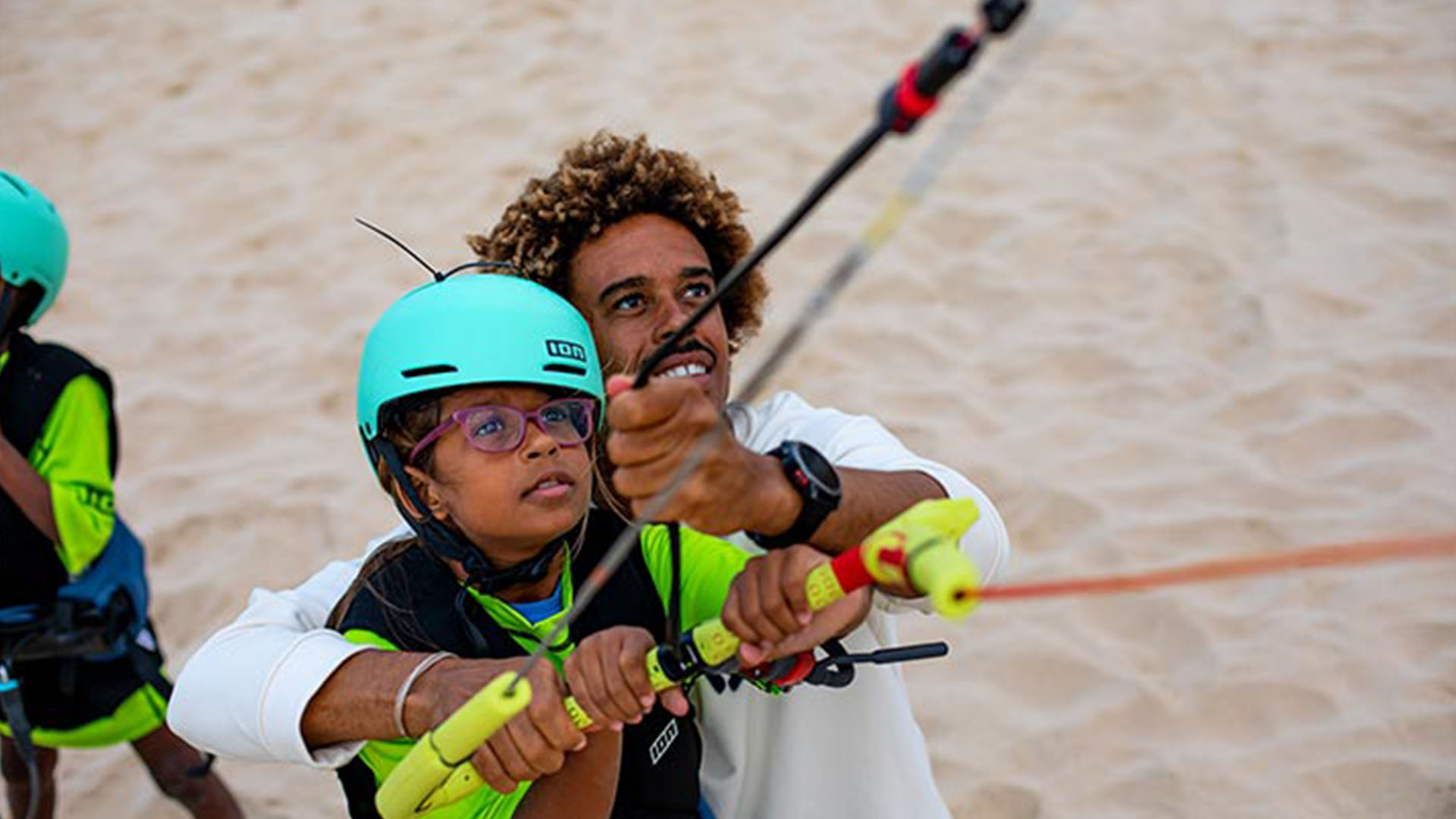
You start with a kite on short lines, which is easier to handle and produces less power. The aim is to build confidence gradually through a few simple but essential exercises:
- Feeling the pull and understanding how the kite’s position in the wind window affects its power.
- Flying the kite in figure eights to increase or reduce the power.
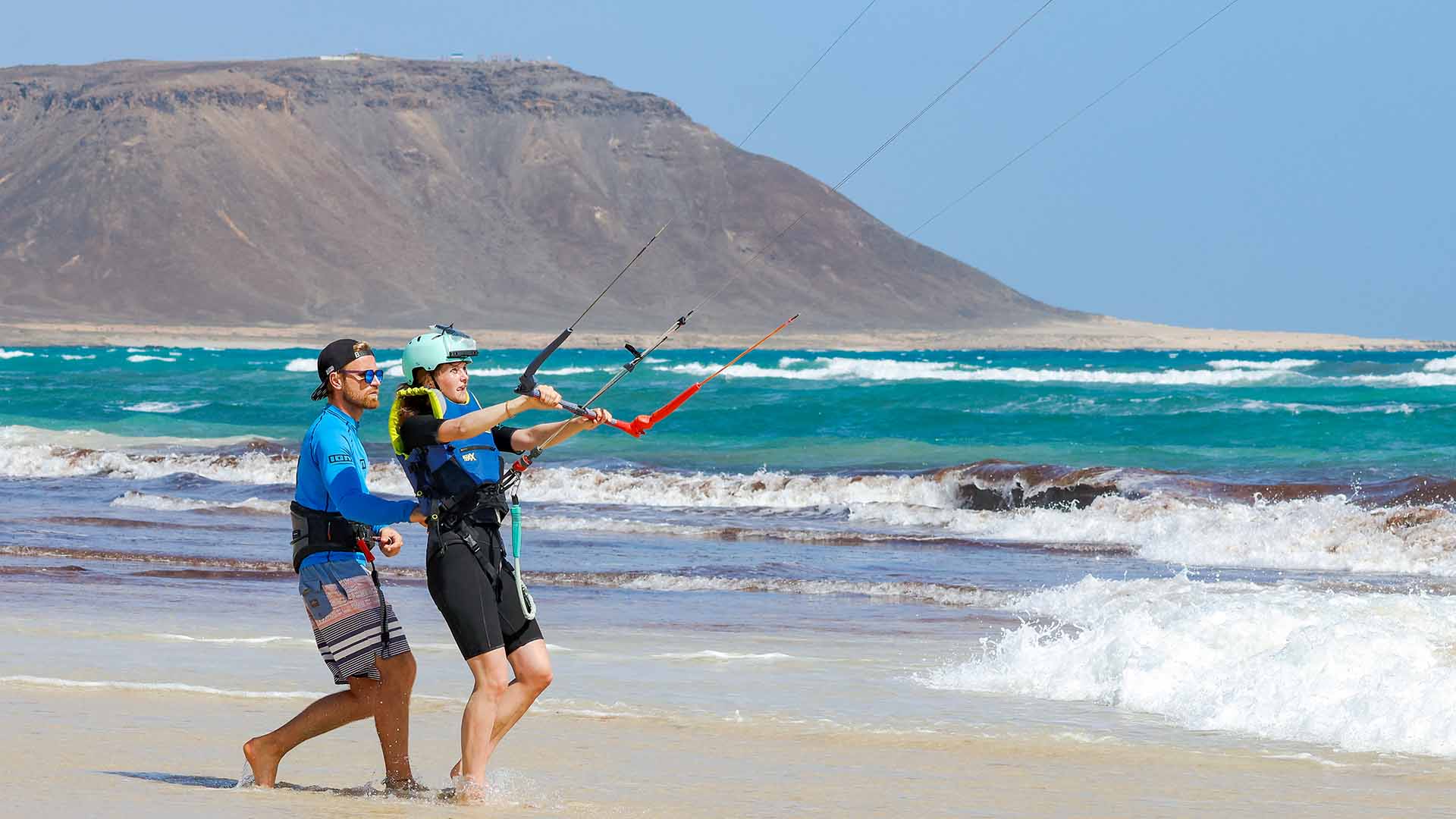
- Controlling the kite in different positions: sitting down, standing up, using one hand, and then walking along the beach.
These exercises help you develop the key reflexes you will need later on. Until your kite control feels smooth and natural on land, it is too early to move into the water. Taking the time to get this right from the start makes everything easier later.
WILL YOU GET INTO THE WATER DURING YOUR FIRST SESSION?
Usually, no. The first session takes place on the beach so you can build solid kite control and learn the essential safety basics. This is a deliberate teaching choice: getting into the water too soon, before you can control the kite properly, increases the risks and can slow down your progress.
Most students are surprised by how precise kite control needs to be, and by how enjoyable it is to feel the wind respond to their movements. By the end of the first session, you can usually position the kite, control its power, and keep it stable. You will also understand the main safety principles, which gives you much more confidence for the next stage.

WHEN DO YOU START USING THE BOARD?
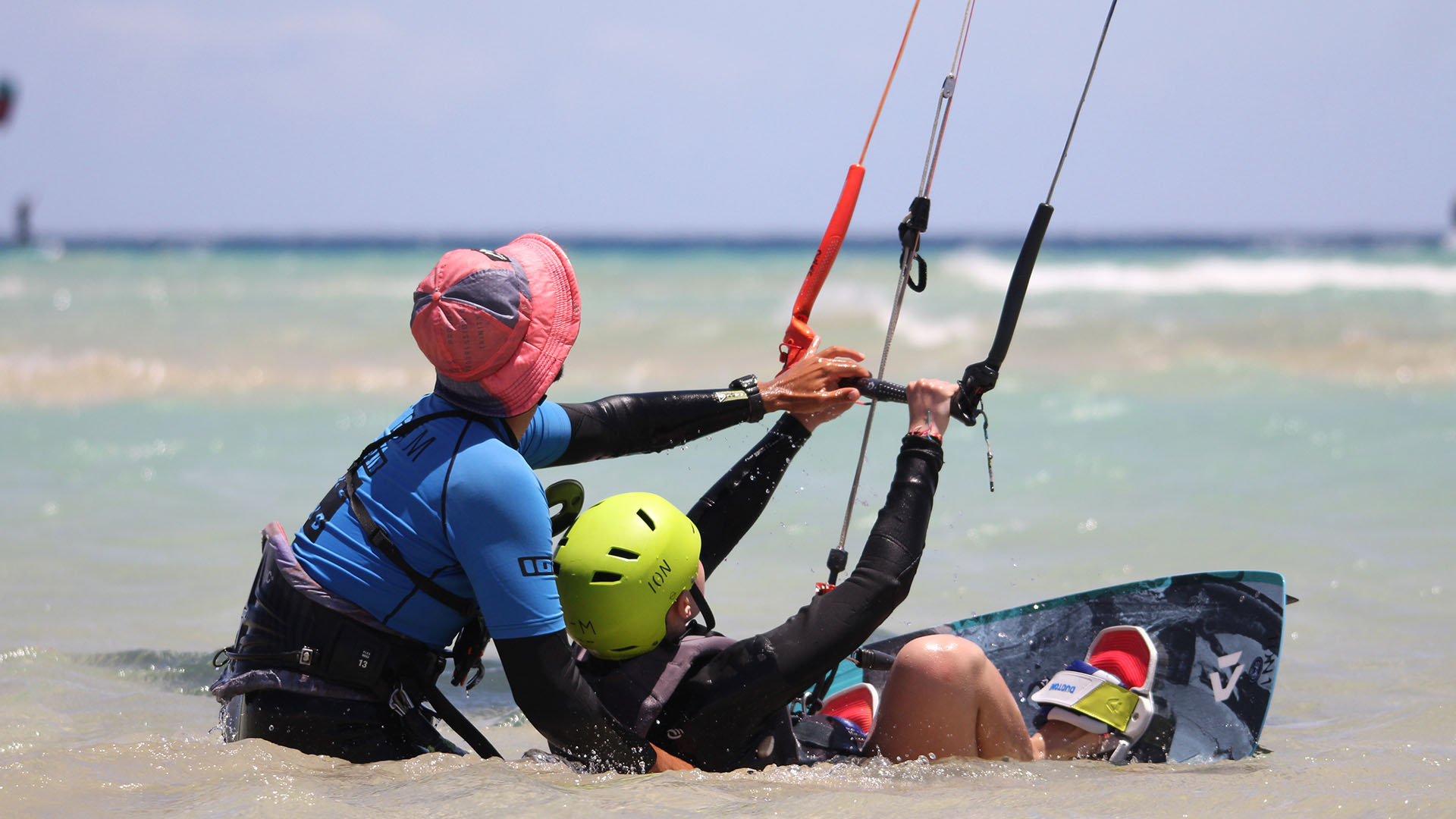
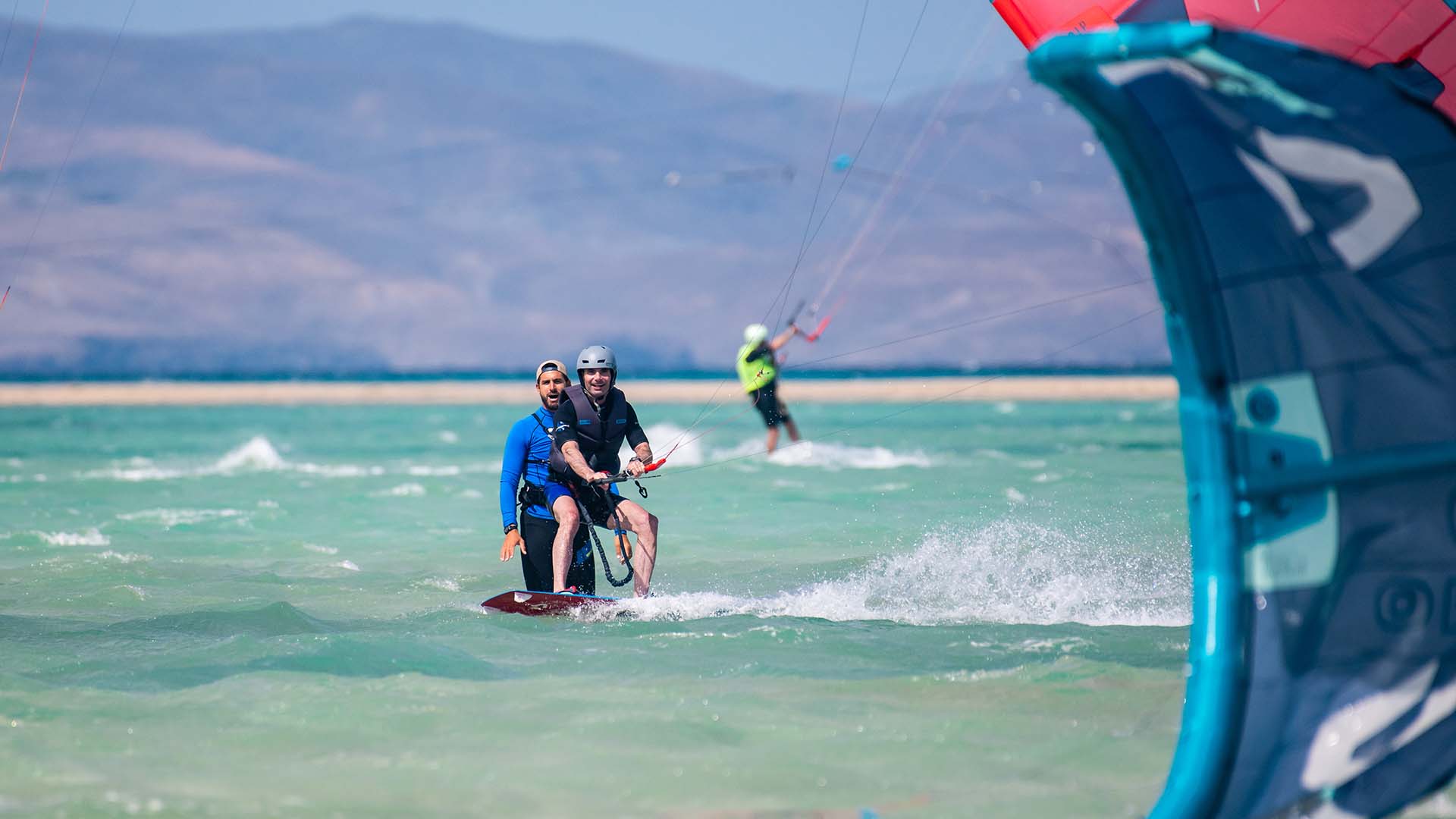
You will usually get into the water during your second or third session, starting with body dragging. This means letting the kite pull you through the water without a board.
The water start, where you get up with the board on your feet, comes next once you have mastered these basics. This step-by-step approach is not a waste of time. It helps you avoid bad habits and gives you a solid foundation for everything that follows, from your first runs to your first transitions.
After learning the water start, the next step is riding upwind so you can return to the same starting point. This stage can take a little longer. Once you are comfortable riding upwind, you can start working on transitions.
IS KITESURFING DANGEROUS FOR BEGINNERS?
With a certified instructor, the right equipment, and a proper safety release system, the risks of kitesurfing are well controlled. Safety is covered from the very first minutes, and teaching you how to manage it is one of the main roles of a kitesurfing school.
Most accidents happen when beginners try to learn on their own, use a kite that is too powerful, or choose an unsuitable spot. During a lesson, your instructor selects the right kite size, location, and conditions. They also teach you essential safety skills, including how to activate the quick release and perform a self-rescue. Learning with an instructor is the safest way to get into the sport.
HOW MANY LESSONS DOES IT TAKE TO KITESURF INDEPENDENTLY?
Progress is better measured in hours on the water than in the number of lessons. With private or semi-private courses, a motivated beginner can often start riding independently after around twelve hours of practice. This can vary depending on the wind, and how regularly you practise, but it gives you a realistic idea of what to expect after your first lesson.
FAQ
WILL I GET INTO THE WATER DURING MY FIRST LESSON?
Usually, no. The first session takes place on the beach and focuses on kite control and safety. Most beginners get into the water during their second or third session.
DO I NEED TO BE FIT TO START KITESURFING?
A reasonable level of fitness helps, but you do not need to be particularly athletic to start kitesurfing. The sport is much more about technique and timing than strength. Learning how to control the kite properly is what really matters.
WHAT SHOULD I BRING TO MY FIRST LESSON?
The centre provides all the technical equipment. Bring swimwear, sunscreen, water, and something warm to wear depending on the season.
CAN YOU LEARN TO KITESURF AT ANY AGE?
Children need to be big and strong enough to control the kite, which is usually from around the age of 11. Beyond that, age is not a barrier as long as your fitness and health allow it.
Oasis212 in Dakhla: Discover the New ION CLUB Spot
Oasis212 in Dakhla: Discover the New ION CLUB SpotAfter White Dune Canyon, ION CLUB is opening a second location on the Dakhla lagoon: Oasis212. This eco-friendly hotel sits right on the lagoon, in a more unspoiled area than the lagoon’s long-established spots, with...

White Dune Canyon, Dakhla: where kitesurfing also trains female instructors
Between Dakhla’s lagoon and the first dunes of the Sahara, White Dune Canyon is now one of Morocco’s must-visit kitesurfing spots. Built with natural materials and powered by solar energy, the ecolodge enjoys a unique location at the heart of the triangle formed by...
FIRST KITESURF JUMPS: A PROGRESSIVE METHOD
FIRST KITESURF JUMPS: A STEP-BY-STEP APPROACHJumping is probably one of the most exciting stages of your progression in kitesurfing. Leaving the water, staying in the air for a few seconds, then landing smoothly is the feeling that takes you from learning the basics...